
Animacy turns one month! And what a journey it’s already been. Thank you for coming along for the ride.
I started writing in late May 2026 with a desire to share where I’m at in my own journey. Because I don’t live in one box. I thrive between worlds. And I believe that this is a superpower. One that I want to share with you.
That’s how Animacy was born. To define this unique intersection I find myself in: the psychology of what makes humans exceptional, applied to real people, teams and systems, through the lens of design and product building. The pursuit of becoming across all angles:
Why do some people keep growing while others plateau, even with the same talent and opportunities?
What makes certain people and teams exceptional, and how do we find them?
How do the stories we construct about ourselves shape what we’re actually capable of?
What does it mean to design for people when most of what drives them is invisible?
In today’s essay, I’m going to walk you through the mind map connecting Animacy’s core mission to what we’ve discovered and learned so far.
What is excellence?
My posts are all pointing to the same core. Strip away the domain. Strip away whether it’s an individual, a team, a system, or a prototype. The premise is the same:
Excellence = someone or something oriented toward a vision of what doesn’t exist yet, and striving to bring it to life.
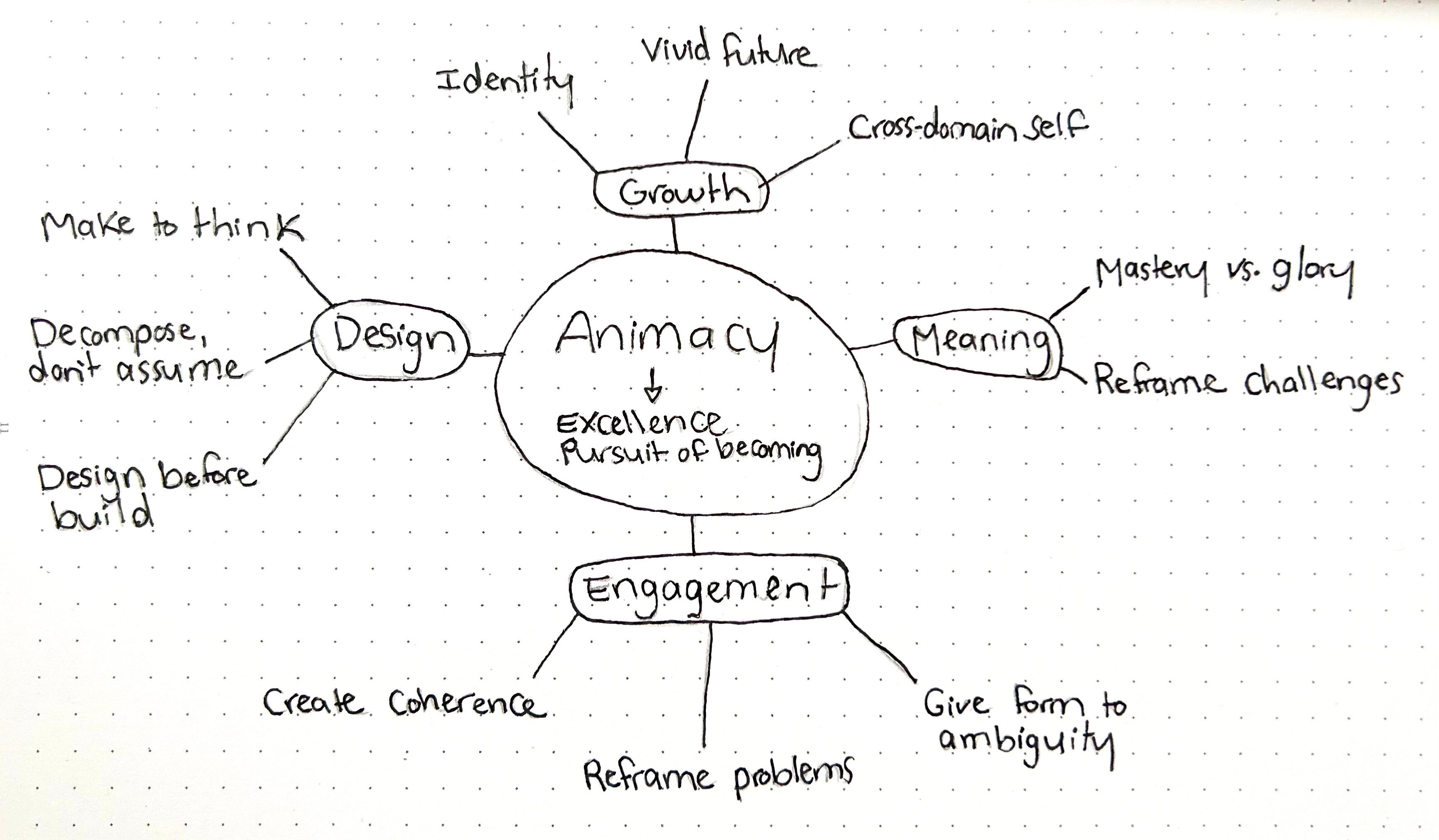
To become excellent, the top performer works through the tension of a future self not yet reached. The organization moves towards a desired architecture not yet formed. The designer holds a preferred situation not yet built. The person in a challenge state is oriented toward finding out what they’re capable of. Mastery orientation is curiosity about an edge not yet reached.
Which means that the opposite of excellence isn’t complacency. It’s an over-rotation toward the past.
We snap back to our old behaviors when we try to change because our current patterns of self are predictable. A team defends what they already produce so they can keep doing the same thing that works. People build on inherited assumptions instead of first principles because if it already exists, no need to rethink it. This is unfortunately the default stance because it makes the world feel predictable, and that gives people an illusion of safety. I believe that every system, left alone, drifts back to this maximum probability.
Excellence is the conscious choice to orient the other way.
That’s the journey we’re on at Animacy. We’re outliers. Moving through the tension, away from the mean and toward a clearer vision of what is yet to be.
What have we discovered so far?
1. Engagement: how people move through ambiguity
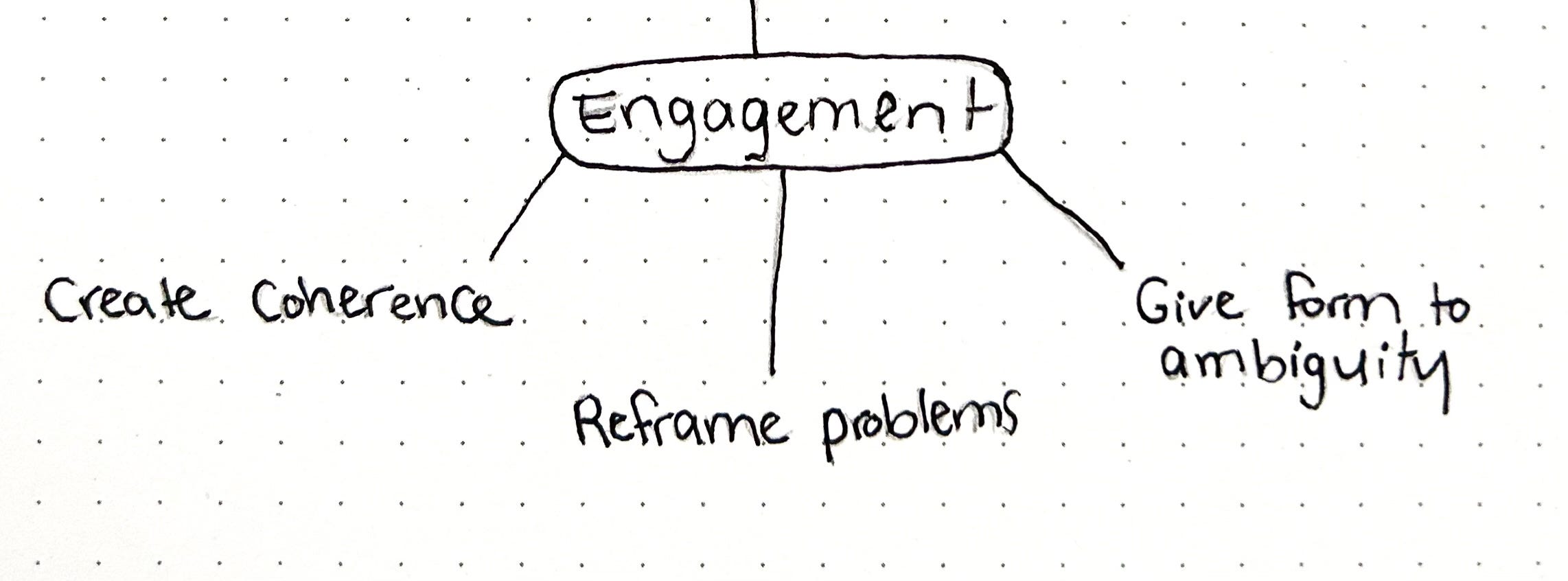
The people who perform well in undefined, fast-moving situations don’t hold a shape (expert, generalist, T-shaped). They have a signature of motion. Credentials measure the knowledge someone has accumulated. Motion reveals how someone behaves when there’s no structure, no clear direction, and no one asking them to step up.
Three patterns show up consistently. Some people compress ambiguity into something others can react to, and their sense of self isn’t riding on whether that thing is good. Others reframe problems through the quality of their questions, not the certainty of their answers. And some become gravitational centers. They add the kind of friction that organizes rather than destabilizes
. These people are not necessarily the loudest or most senior.
How to observe it
When something feels stuck, ask yourself, who would move first if there were no meeting, no agenda, and no one asking?
Who makes the imperfect thing before anyone’s agreed on what to make?
Who reframes problems and gets teams to climb the right mountain?
Whose presence makes the group feel organized and coherent?
Dive deeper
2. Meaning: getting energy from challenges
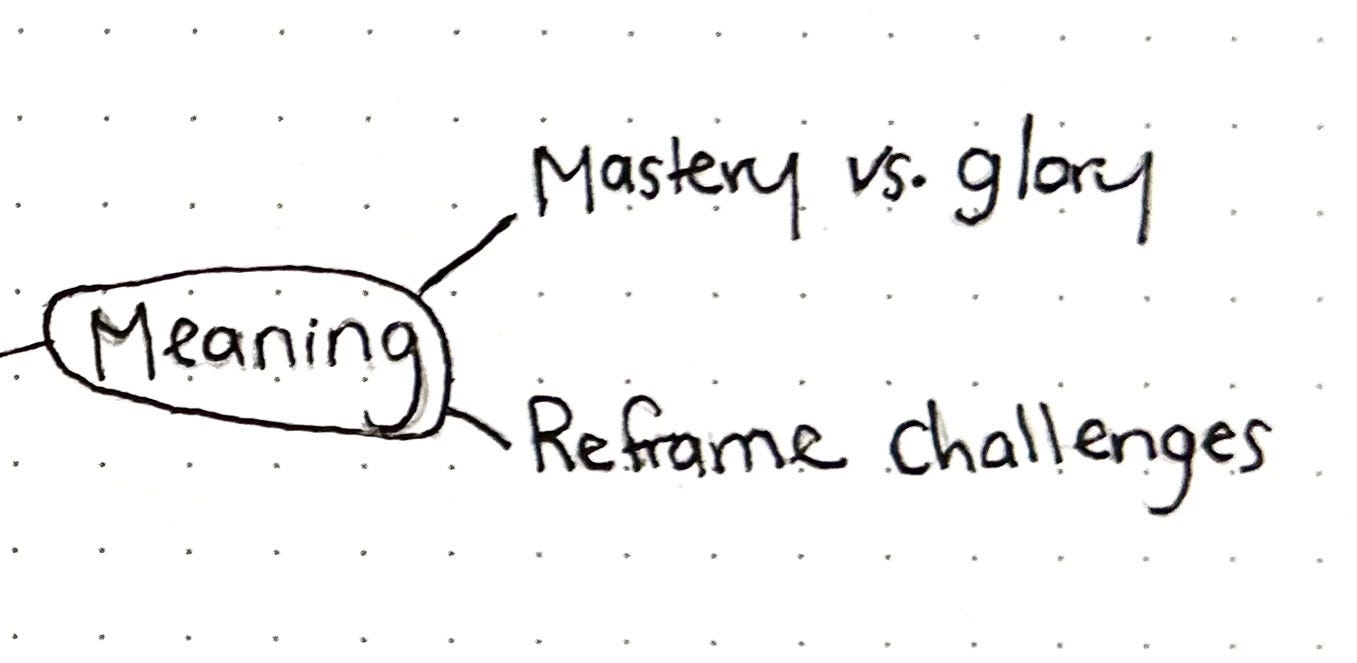
When there’s a challenge, two interpretations are always available: “this is hard because I’m becoming something. I’m getting closer to the vision I have in mind” or “this is hard because I shouldn’t be here.” Which one is driving a person, a team, a work culture tells you almost everything about their orientation toward the future.
One is self-referenced: are you better than you were? Are you closer to the edge of what you’re capable of? This mastery orientation tends to come from genuine curiosity about your own potential. Ego orientation is other-referenced: are you better than them? Did you win, did you place, did you look good in comparison? One leads to growth, the other to frustration, anxiety, and disengagement.
How to observe it
Watch what happens in the first few minutes after something doesn’t work: does the person get curious about the problem, or do they start attributing blame?
When they’re wrong or fail, do they tackle the problem again from different angles? Are they genuinely curious about how they can get better?
Do they get more energized or defensive as the problem gets harder?
Dive deeper
3. Design: ask before you build
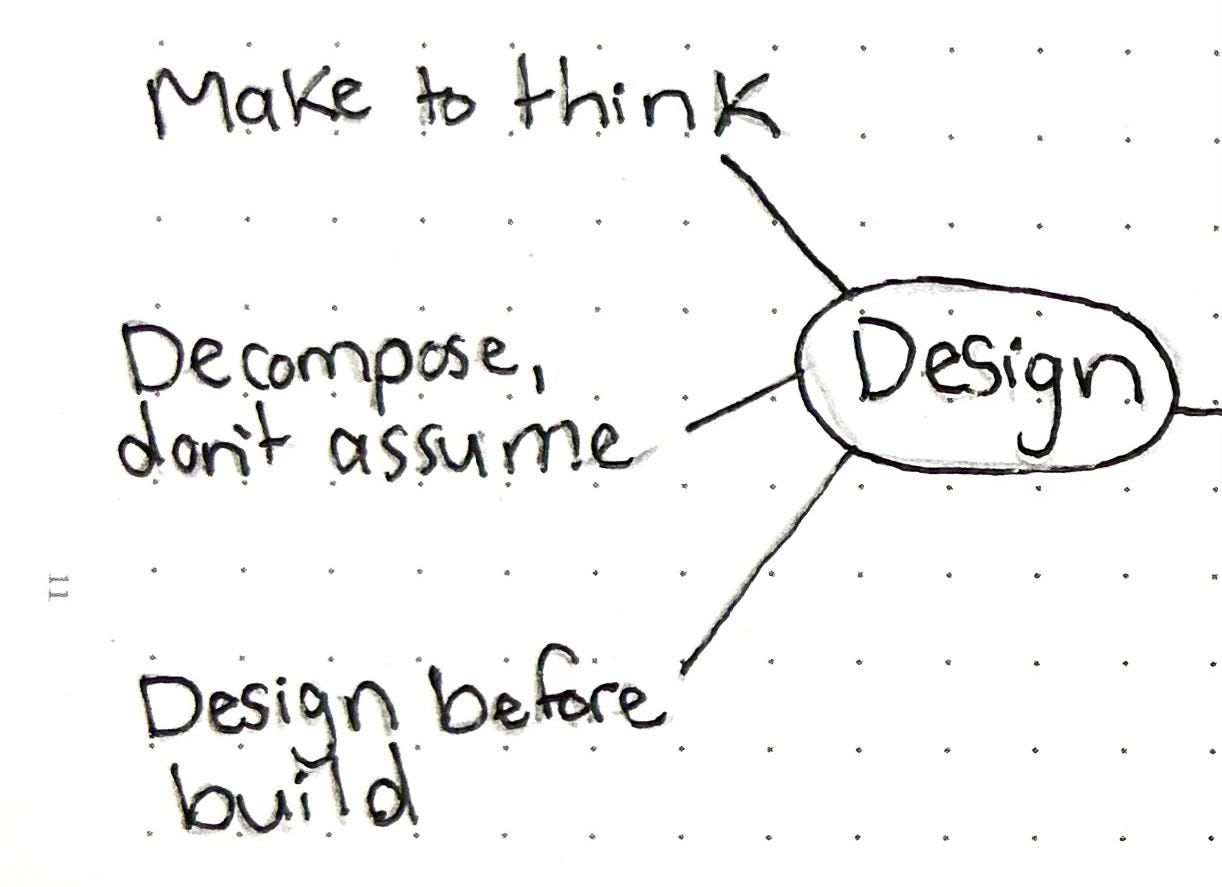
Most things get built on inherited assumptions. What a product should do, how a team should be structured, what a process is for. But true design is the act of changing existing situations into preferred ones. Not continuously adding on to what already exists, just because it exists.
Go back to first principles and make your vision of the future more clear. From there, build the smallest thing that tests whether your assumptions are right. Not a prototype of the final product, but something that reveals how the pieces of the system actually interact. What you discover by tinkering from that framing is almost always different from what you assumed at the start. And it’s likely more simple too.
How to observe it
What is this thing made of, at its most basic level?
What does the person using it actually need? Not what they say they want, or how they’ve been using it in the past. But what they’re trying to do.
What does success look like from their perspective, not yours?
What actually stands between the current situation and the preferred one?
Dive deeper
4. Growth: the pursuit of becoming
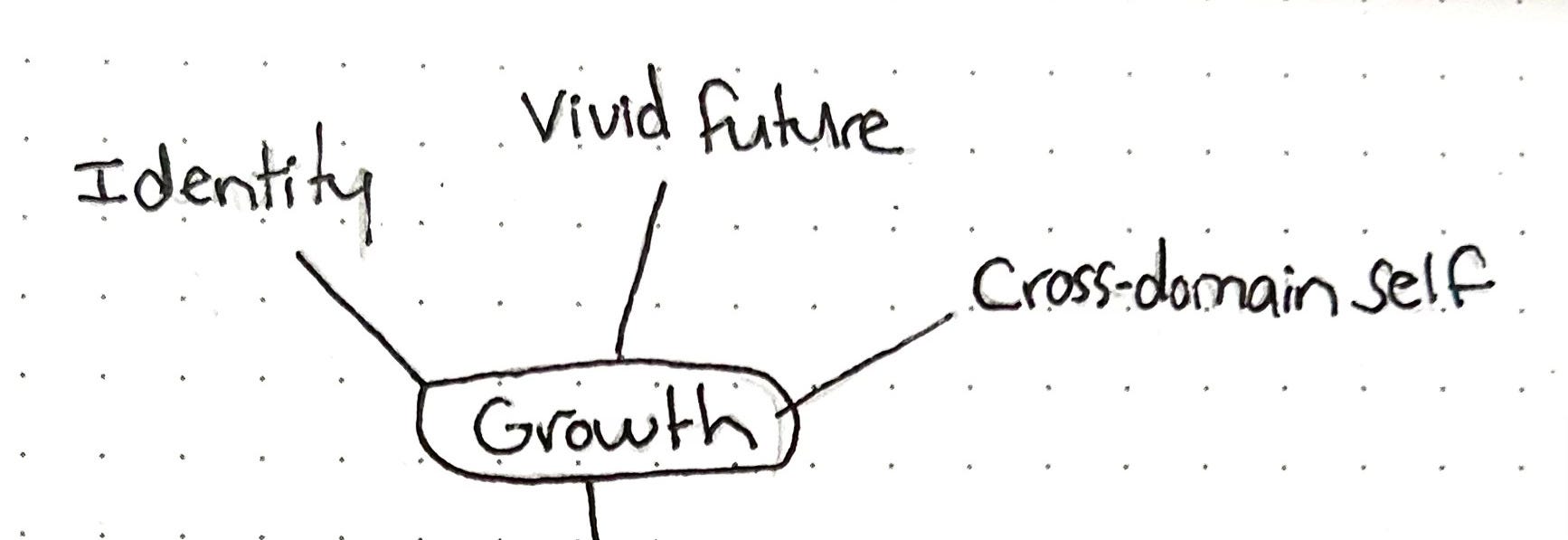
The people, teams, and systems that exude excellence all have this in common: their identity is tethered to a vivid vision of the future. For a person, that means the gap between who they are now and who they’re becoming stops feeling threatening and starts becoming fuel. For a team, it means the work is in service of something they’re building toward, not what they’ve always done.
This identity can get fragmented when external expectations get tangled with a system’s internal values. When this happens, a person can’t access what they know under pressure because the anxiety of having to live up to others’ expectations takes over. A team that stops thinking clearly when stakes go up, because they’re building from someone else’s definition of success. A product loses coherence because it was built to do everything for everyone, and ends up being useful for no one.
To prevent that fragmentation, identity has to widen to include additional possibilities. Not as a replacement for the original vision, but alongside it, so that the external threat occupies a much smaller part of identity. This makes the system more adaptable and resilient.
How to observe it
Where is pressure highest right now? Is the person, team, or system under that pressure still oriented toward a clear vision of what it’s becoming, or trying to incorporate too many external expectations and assumptions?
Can you describe the future state specifically enough that you'd recognize it if you arrived?
What would you have to let go of to get to your desired state?
Dive deeper
We’re just getting started
When I look at this map, I see the very beginning of an epic adventure. Each branch is a new land to discover, and each node is material to build from.
And through the act of writing (and reading), we now have language for each piece. And language is key. We can’t optimize for what we can’t see. And we can’t design for what we can’t name.
This month gave us clarity. Now pick up your bags, let’s keep thinking.