
The most significant change in tech right now isn’t just AI. Yes, what we’re seeing at an exponential rate is organizations restructuring to meet this new world. Layers coming out, hierarchies flattening. The architecture is catching up. But what's really shifting underneath is the physics of talent.
Physics defines the rules of the world we operate in. When the rules change, everything built on top of them has to adapt. In the urgency to restructure, it can be easy to miss: what kind of person actually thrives in this new world? And do we have the language and tools to identify them?
That’s the problem worth solving. But how do you observe the unobservable? It’s a tension research psychologists grapple with every day. People are not transparent. What makes someone exceptional, the way they think, the way they tackle problems, the way they transform a room, often resists direct measurement.
That’s precisely why shapes are a useful metaphor. Not because people are geometric. But because a shape is an attempt to make the invisible legible. To give observers a language for something they can sense but struggle to articulate.
So let’s start there.
The psychology of people as shapes
Describing humans can be complex, and largely varies depending on the context and goal. Like in the famous saying by anthropologist Clyde Kluckhohn and psychologist Henry Murray in their foundational work Personality in Nature, Society, and Culture:
“Every human is like all other humans, some humans, and no other human.”
To simplify things, the existing taxonomy of people-shapes in organizations maps a person onto two axes: depth of expertise (the vertical) and breadth of knowledge (the horizontal).
Three shapes tell the whole story.
I-shaped. Pure depth, one domain. The specialist. Reliable, expert, and brittle in anything that requires translation across fields. The org knows exactly where to put this person and exactly what to ask of them.
T-shaped. Deep expertise in one domain with working knowledge across several others. Introduced in 1991, it became the dominant framework of the knowledge economy. The person who could both do the thing and talk to the people doing other things. Depth plus legibility.
M-shaped. Multiple areas of deep expertise across a broad base. The person who went deep, surfaced, and went deep again somewhere else. More anchors, more range, same underlying logic.
There are variations, but every one of them is still a rearrangement of the same two axes. These frameworks are useful. They gave organizations a vocabulary beyond job titles. They helped move past the false binary of specialist vs. generalist. But notice what they all have in common: they describe something static.
Depth and breadth aren’t enough
The problem with the taxonomy isn’t that it measures the wrong thing. It’s that it measures a frozen thing.
Every shape is a snapshot. A cross-section taken at a moment in time, pressed flat, and handed to an HR system. It captures what someone has accumulated, not how they move through structures and systems.
And that was fine, because the structures these shapes were designed for were also static. Stable hierarchies. Predictable career ladders. Roles with clear boundaries and long time horizons. In that world, the goal was to find the right shape for the right node and keep it there. Depth and breadth were the right axes because the org itself wasn’t moving fast enough to demand anything else.
But the people we’re looking to describe (those that can perform optimally in shifting structures) are often the ones who resist resolution. They don’t consolidate into a single shape. They hold contradictions, borrow across domains, and find energy precisely where others feel tension.
The missing dimension: motion
These shapeshifters do have one very interesting thing in common: movement.
The T, the I, the M. They were positional. You earned your shape, you stood in it, and the organization came to you. The hierarchy was the motion. Your manager escalated things up, your direct reports executed things down. The structure itself was the circulatory system. Your shape described what you contained, not how you moved.
This made sense in a world where information flowed through layers by design. The org chart was literally the map of how work got done. But now, we’re seeing the routing systems get selected out. There’s no one to escalate to, no clear handoff, no manager to translate between nodes.
So the new shape cannot be about what a person contains. It has to be about how they move when there is no system moving them.
The signature of motion
The competitive edge then becomes the ability to observe not what a person contains, but how they move through systems, problems, and people. But where do we start? If it’s the physics that have changed in the AI era, then I’ll start my analogy there (knowing this is a thought-seed that needs to grow and evolve too).
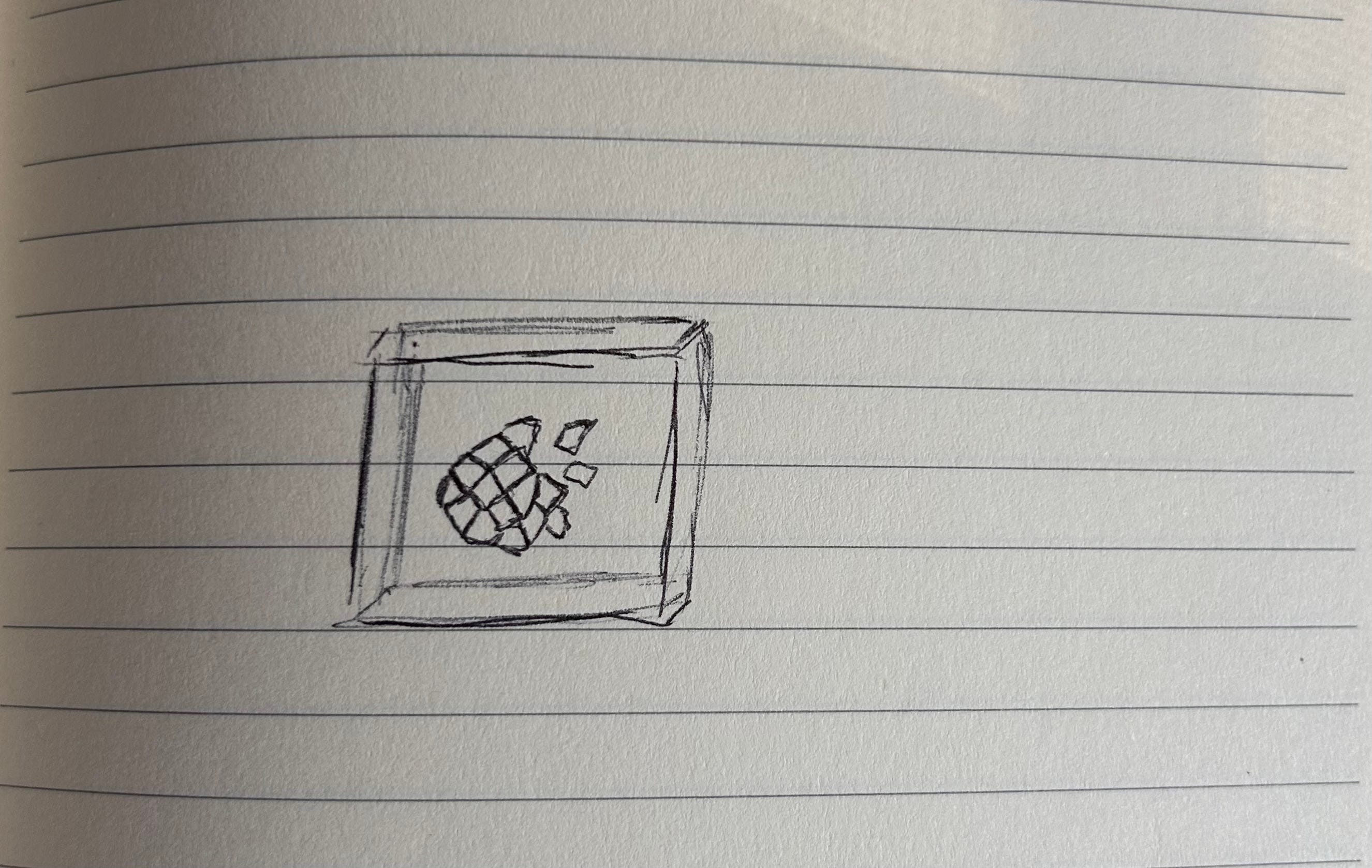
Crystallization. The process by which something formless becomes structured. A catalyst that turns potential into form. These people compress the distance between thinking and making. Ideas don’t stay ideas around them, they become artifacts others can hold, react to, build on. In a flat structure with no layers to route through, they don’t wait for permission. They make something, and the something becomes the conversation.
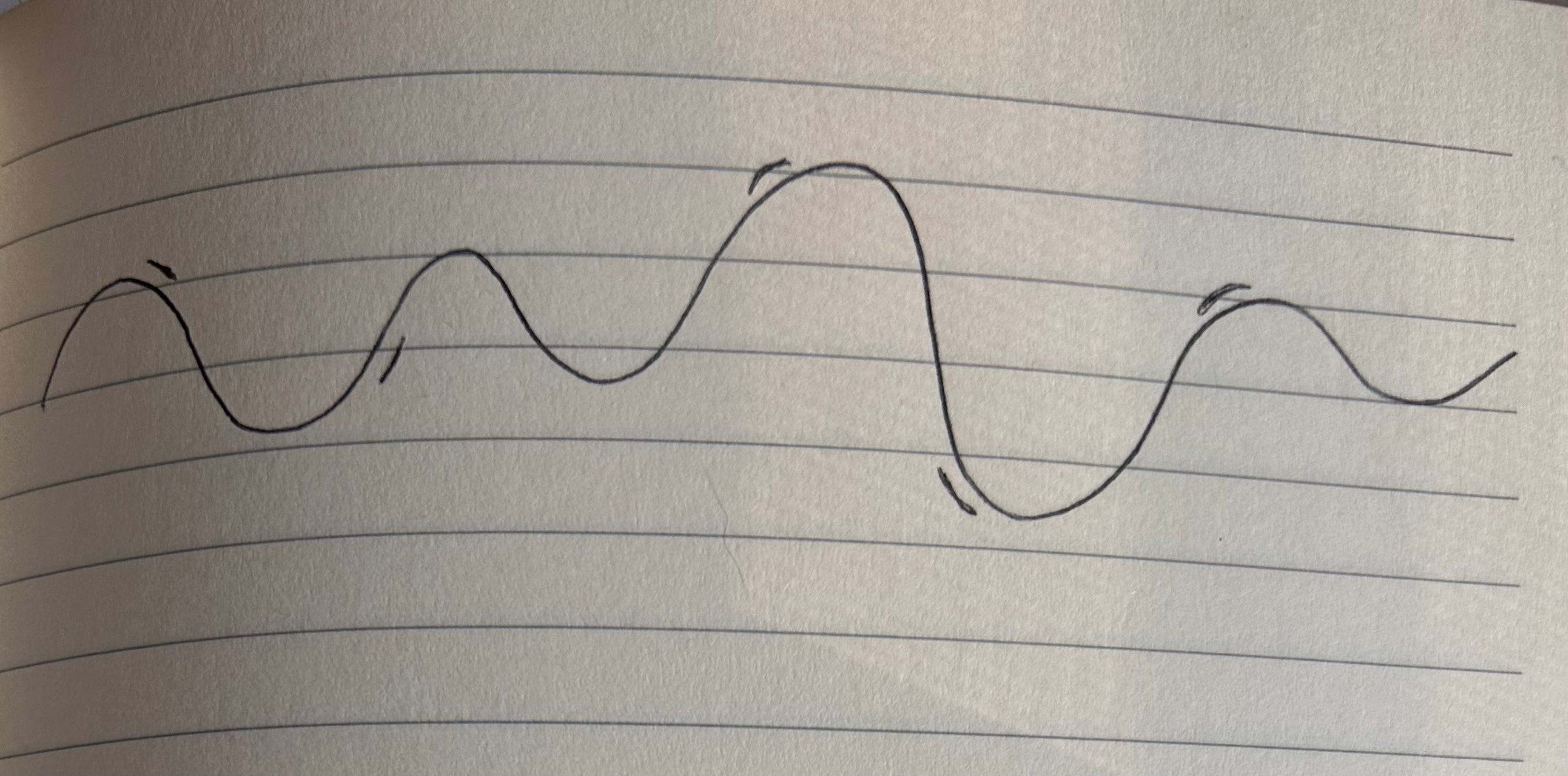
Propagation. A wave moving through a medium, carrying energy and changing what it passes through. Drop these people into any problem space and the system is different after. Not because they already knew the domain, but because of how they entered a problem. The quality of their questions creates context where none existed. The change travels. And everyone else in the room finds themselves thinking from a new angle without quite knowing when it happened.
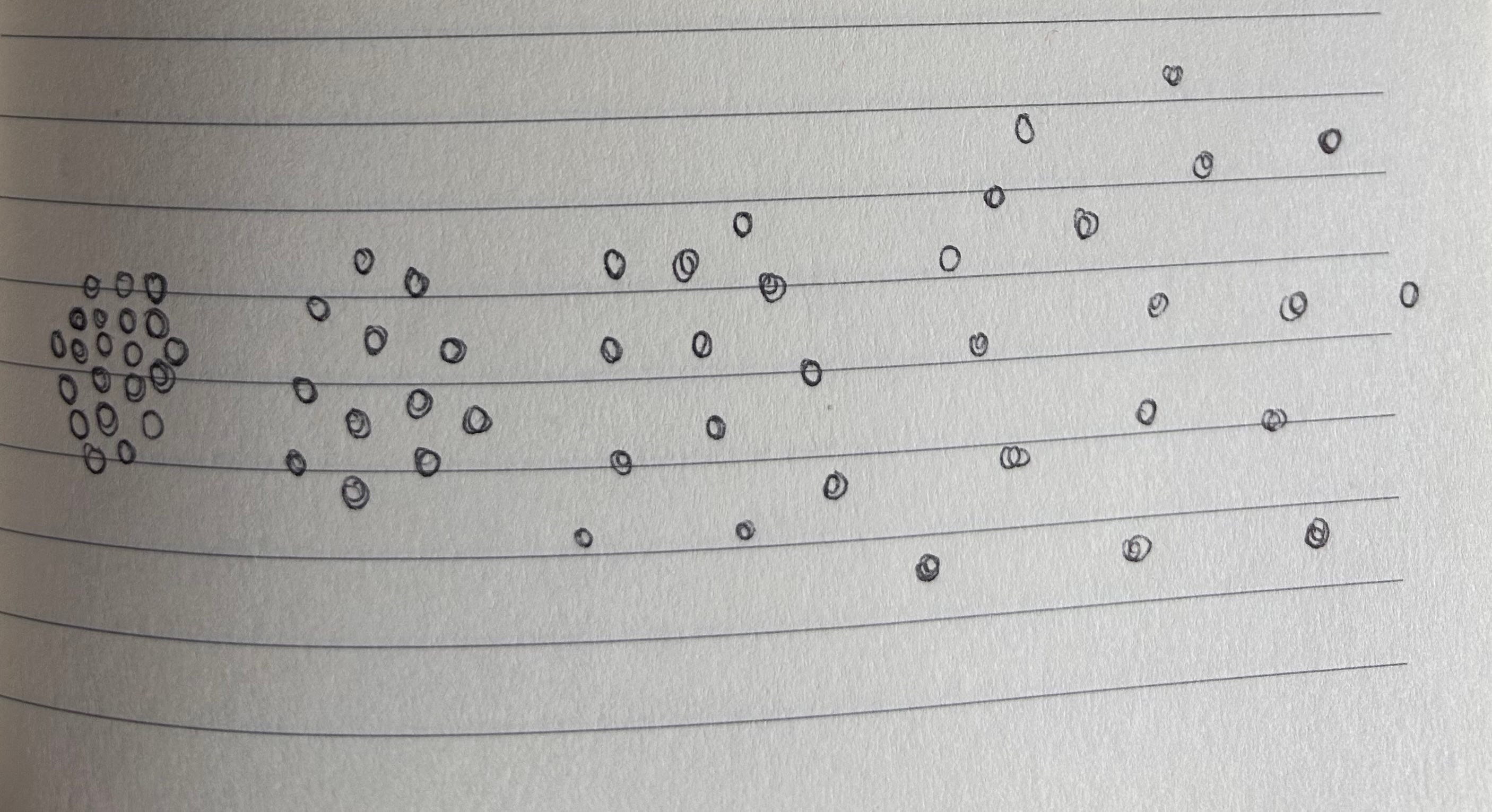
Diffusion. The way something spreads outward from a point of concentration into surrounding space. No force required. It moves toward where it isn’t yet. Others gravitate toward these people, not because they make things easy, but because something generative happens in their vicinity. They add friction. But it’s the kind of friction that elevates rather than destabilizes. They don’t need the org chart to tell people where to go. They become their own gravitational center.
The three patterns above are not a framework. They’re a starting point for a different kind of observation. What the instruments look like, how you actually see motion in a hiring process, a performance review, a team structure, that’s the next question.
The new world
This next era will be defined by the companies who can see these signatures of motion, and build environments where these people want to stay.
That’s a harder problem than redrawing an org chart. It requires the willingness to let go of shapes that worked in the old physics, even when those shapes still look impressive on a scorecard.
The structure is changing. The physics have already changed. The question now is whether our talent strategies can catch up.
Looking forward to following where this series goes!
I wonder what shapes are currently running and directing these Talent systems too. This will be another interesting era of human development!
This was a great read, Eve! Looking forward to hearing more about your thinking and tinkering :)