
I fell in love with psychology because of sports.
Soccer to be exact. When I was in junior and high school, this sport was my whole life. I trained and trained and built the speed and skill that got me on a U18 travel team when I was 15 years old. I spent the winters playing in indoor leagues, the spring training in camps, and the summers traveling around a 5-hour radius from my house. It was everything to me, until it wasn’t.
I hit a breaking point where I just couldn’t take the pressure anymore. I was trying to keep my grades up to qualify for university scholarships, and I didn’t believe I’d be able to excel at school and play competitively. I didn’t believe it. So I stopped.
When I got to university, I kept thinking about how my performance and potential were just a fabrication of my own mind. I couldn’t shake it off. I had to understand what excellence was and test its edges. So I switched my major to psychology and started volunteering in a sports performance lab.
To this day, I’m still fascinated by the psychology of champions. By people that are not just top performers in their fields, but have redefined them over and over again.
I think we have a lot to learn from them. Not that they’re perfect, but because they are a template for us. A permission to go all in and be relentless in our pursuit of becoming.
What’s identity got to do with it
Before I break down the psychological components that elevate champions to a league of their own, I’m going to bring us way back to how identity forms and evolves for most people.
It’s from that foundation that I’ll break down the champion’s mind:
vivid imagination of possible selves
unwavering connection to that future self
ability to get energy vs disengagement from the present-future self gap
genuine curiosity towards becoming versus performing or being praised
ability to create meaning from challenges and discomfort
I’ll also talk about what happens when that identity fragments. When people’s expectations, the pressure to succeed, sponsors, fans etc., starts to seep into who the champion believes they are, and how to overcome that part and get back to authenticity.
Then I’ll close it out with some takeaways. I’ll highlight what you can integrate into your own life, so that you can find more joy and meaning from the pursuit of becoming as well.
We manipulate the world to match who we think we are
Identity is formed in early life. We learn about ourselves through experiences and the feedback we get from our environment and the people around us. With time, this feedback loop gets integrated into our subconscious and becomes our identity. Who we believe we are. The voice inside our head.
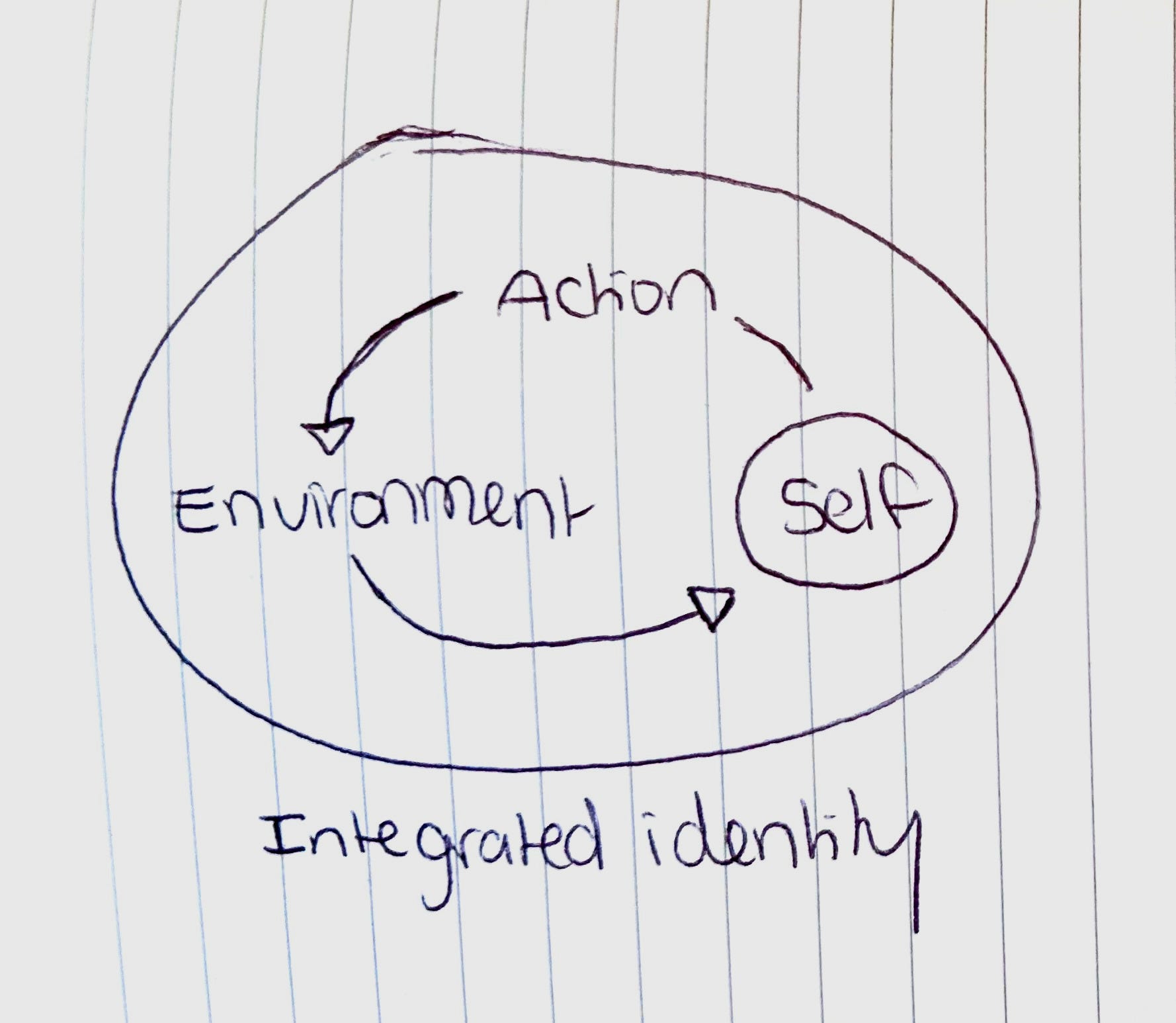
And our psyche goes through a lot of trouble to keep that belief intact. According to identity control theory, our identity becomes our standard. Our main reference point. When we get incoming feedback from the world, we compare it against that standard. When the feedback matches, nothing needs to change. But when it doesn’t, we feel an uncomfortable tension. And to make that tension go away, we actually try to bring the environment back into line with our standard, not vice versa.
That’s right, for most people, our goal is to manipulate the external world to match who we think we are. We will actively seek out relationships, environments, and activities that confirm our existing identity because it matches predictable patterns. It’s more comfortable. And that’s a safer bet than being faced with the unknown.
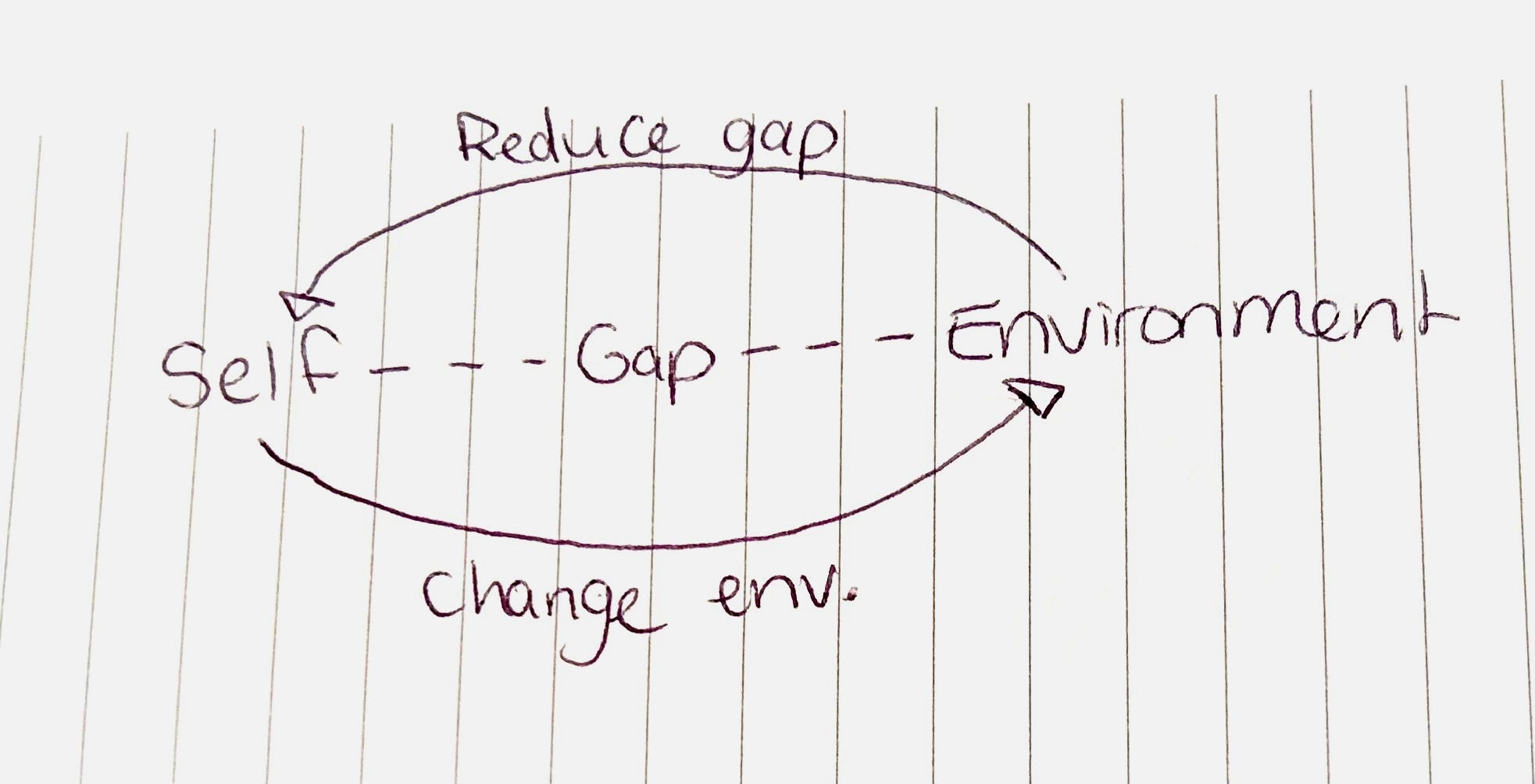
Of course, it’s also normal for people to want to change. We have will, and for many of us, a desire to grow.
Imagine all the possible…selves
Humans have the wonderful ability to imagine. And it turns out that in our imagination, we think about ourselves… a lot. Sometimes we think about past selves, or present selves. But it’s also common to imagine who we want to become in the future. Researchers call these possible selves.
Because the possible self is oriented toward a future that doesn’t exist yet, it produces a tension in the psyche and activates that identity loop I talked about earlier. But this time, the gap isn’t about resolving the tension between identity and the environment. It’s about resolving the tension between who a person thinks they are now, and who they desire to become in the future.
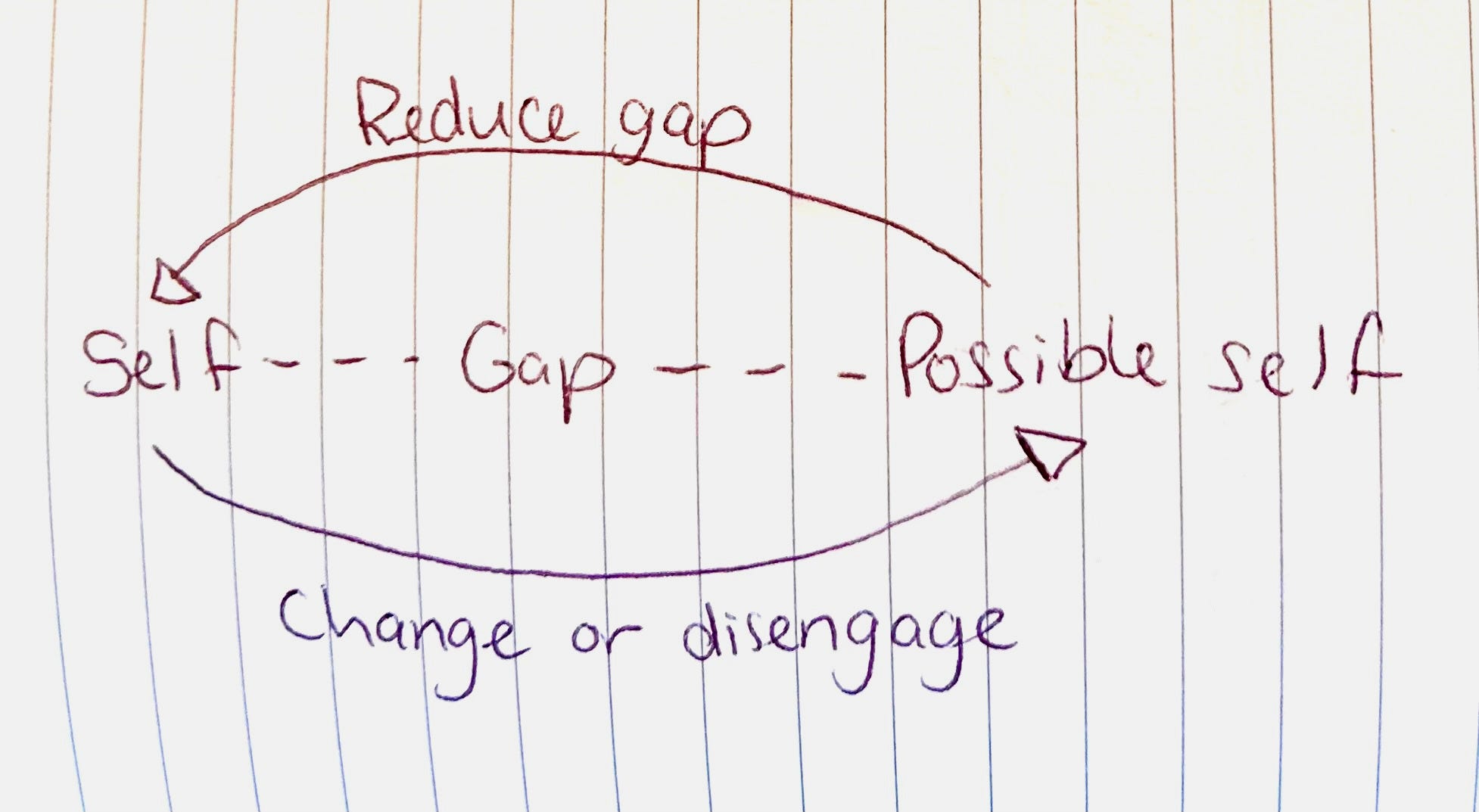
For most of us, we’re like an elastic band. We get inspired and use our imagination to stretch into a possible self that represents who we want to grow into. But our identity feedback loop uses our behaviors against us. Unconsciously too, which is even more frustrating. We act out of habit with our current self and the elastic snaps back. We continue in our comfortable, predictable pattern of self.
But growth is possible.
Use the tension for energy, or you’ll snap back
Enter Mental contrasting. It describes the cognitive process where a person deliberately holds the desired future in mind first, and then consciously confronts the present reality that stands between here and there.
But whether mental contrasting leads to new behaviors and then change, depends on what you expect. Our minds have a lot of power, don’t they?
If you have a high expectation of actually reaching the possible self, contrasting produces measurable energization. Increased effort, increased readiness to act, even physiological activation. But if your expectation is low, the same act of contrasting produces the opposite: disengagement. And that’s a motivation killer. Knock out. You snap back to your current self.
So if that possible self feels real and attainable, and you can hold that tension in your mind even when you current identity is yelling at you to stop, you might get energy and motivation to act, and to keep acting, until you’ve become that possible self. Until you have successfully manifested who you expect to become.
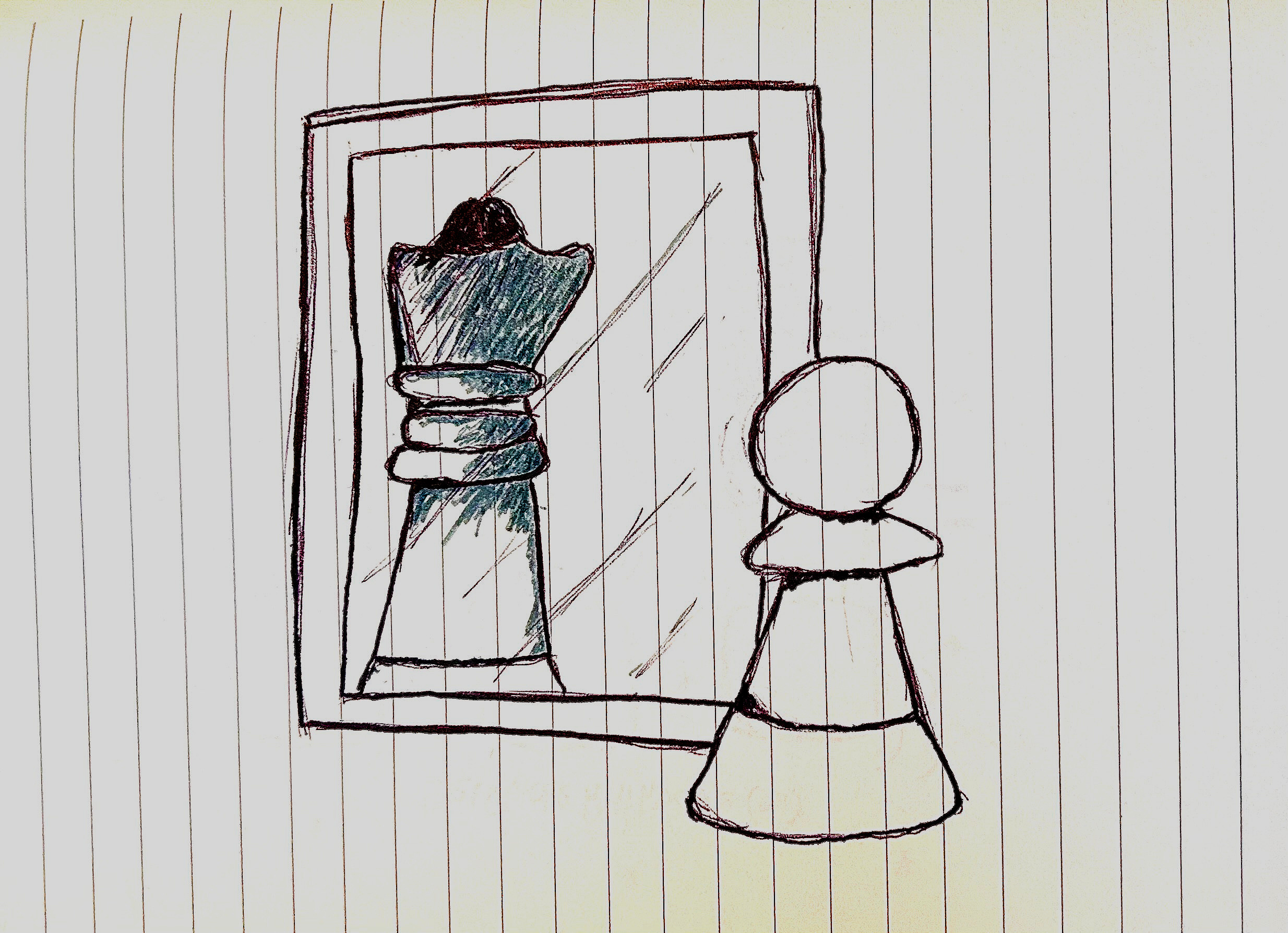
For most people, most of the time, imagining possible selves doesn’t lead to energization. It actually leads to disengagement and even indulgence. We enjoy the image of who we could become, without confronting what stands in the way to actually get there.
Champions are their future selves
I think champions are the opposite. They are masters at getting energy from that tension. And that battle happens fully in the mind.
“I admire the mental aspect of sport more than the physical aspect, because physical performance is much easier to practice than mental performance.” — Rafael Nadal
And I don’t think champions just imagine their possible selves doing causal, daily tasks either. Their possible selves are shattering the ceiling of what is possible in their sport. That takes imagination. Not just a little bit either, because most of the things they have to imagine haven’t happened yet, ever (think breaking multiple records or inventing new techniques). They have to believe in that unrealistic possibility so intensely that most people would feel delusional doing that.
"I always believe I can beat the best, achieve the best. I always see myself in the top position" — Serena Williams
So what gets champions to feel such a strong connection to their possible self? What gets them to sustain that connection through challenges, setbacks, and failures, when most of us would just snap back to our old self?
Well, I don’t think they’re just imaging future self. That self is part of their identity. They actually are that future person.
Psychologist Hal Hershfield’s research on future self-continuity gives this a measurable shape. His research found that people who perceived future self as less similar than them, with less detail, and less favorably described their future self how they’d describe a stranger.
And it’s what a lot of people experience. They imagine a possible self they’d like to become, but that image is dull, it doesn’t feel real, and there’s no connection there. So it doesn’t matter if they skip the gym today, they don’t really care what happens to that person six months down the line. They’re so far away. It’s much easier to snap back to old habits.
But champions stay tethered to the future. My collaborator Tim Pychyl and I extended this research and found that people who could imagine their future self more vividly, and who were able to feel empathy for them, actually felt more similar and connected to them. That self felt more real. More like a part of the person’s identity. And when that future person is you, it becomes much harder to let them down when things get tough. That’s true of champions.
"Every single day I wake up and commit myself to becoming a better player." — Mia Hamm
I become therefore I am
What’s even more interesting about champions’ minds is that even though they feel an intense connection to a possible self that is quite literally the best, that exudes peak performance and excellence, their current self doesn’t focus on the potential glory and praise that would come with elite achievements. They don’t indulge. They actually reject the exact label I’ve been sticking on them throughout this essay. They don’t see the final destination as: I am a champion. Their destination is about becoming the champion. And that reframe makes all the difference.
“I’m more of a competitor than a winner, to be honest... If I compete, I feel good.” — Rafael Nadal
Psychologists studying achievement motivation distinguish between two ways people define success for themselves. One is self-referenced: are you better than you were? Are you closer to the edge of what you’re capable of? This orientation tends to come from genuine curiosity about your own potential. Researchers call this mastery orientation, and it’s linked to better performance and more sustainable motivation.
“I feel an endless need to learn, to improve, to evolve, not only to please the coach and the fans, but also to feel satisfied with myself. It is my conviction that there are no limits to learning.” — Christiano Ronaldo
The other type of motivation is other-referenced: are you better than them? Did you win, did you place, did you look good in comparison? This is ego orientation, and when it dominates, a loss doesn’t just feel disappointing. It can lead to anxiety, frustration, and in some athletes, giving up on the sport altogether.
A future self anchored in curiosity about your own edges has permanent high expectancy, because curiosity doesn’t require winning to be satisfied, it just requires finding out what you’re capable of. That identity will keep you energized… forever.
“A successful competition for me is always going out there and putting 100 percent into whatever I’m doing. It’s not always winning.” — Simone Biles
But a future self anchored in glory depends on outcomes you can’t fully control, including what other people decide to think of you. It’s easy to lose yourself in that and forget why you’re putting yourself through all these challenges in the first place.
And challenges are a big part of it. It’s the toil that creates meaningful change. It might sound cheesy, but you truly can’t grow without it. And you certainly can’t make a champion.
Challenges fuel the fire, or put it out
Most (if not all) of peak performance is a product of the invisible, daily work that makes the vision real rather than aspirational. And nobody is watching that part. No one is cheering or spraying champagne. But it’s where change actually happens. You can’t skip it.
“The vision of a champion is bent over, drenched in sweat, at the point of exhaustion, when nobody else is looking.” — Mia Hamm
So how do champions keep showing up day in and day out without compromise? Well, I don’t think they just tolerate suffering, they actually find meaning inside it. At the level of the body, the same demanding situation can produce one of two physiological states. When the person believes they’re capable of meeting the challenge, feel in control of the outcome, and their orientation is toward approach (finding out what’s possible with curiosity) the body responds with a challenge state: increased cardiac output paired with decreased resistance in the blood vessels. A pattern that delivers blood more efficiently to muscle and brain.
“There have been a few players who are as naturally gifted as me, but they didn’t work as hard. I wake up every morning and I know that today I have to be better than yesterday.” — Christiano Ronaldo
When belief is low, or the orientation flips toward avoidance (not failing, not losing, not falling short) and the body produces a threat state instead: cardiac activation without that same drop in vascular resistance, meaning the same physical effort is now being fueled less efficiently.
This means that the same training session that would exhaust one person can actually energize another. And this isn’t about sleep, nutrition, or physiology (although those are also important variables).
This is all in the mind. What a person thinks and expects literally changes the body. So powerful.
At the level of meaning, a parallel split shows up in how difficulty gets interpreted once a person is already in the challenging situation. The same hard session, the same setback, the same plateau can be read in one of two ways. As confirmation: this is hard because it matters, because this is what becoming who I am is supposed to feel like. Or as disconfirmation: this is hard, and that probably means it isn’t going to work, maybe this isn’t for me.
When the vision fragments, it must widen
All this put together makes the champion. The possible self as core identity. The energy from the tension of not yet being that self. The curiosity in the process of becoming, not just winning or achieving. The meaning found in difficulty and challenges.
So far, I’ve described how a champion sees themselves and challenges from their own perspective. Their own hopes for who they’re becoming, not anyone else’s. They are in the driver’s seat. And that holds true for the most part.
But what I haven’t talked about yet are the standards that are set by the external world, and by significant others. Who coaches, fans, family, an entire sport’s expectations, believe a person should be. And with rising success, ‘Who I’m becoming’ and ‘who I’m not allowed to disappoint’ can start to get entangled. That’s when a bad performance or a loss is no longer just feedback for the self. It’s also a gap relative to an obligation.
Unfortunately these external expectations come with emotions like anxiety and fear, which are, by definition, the emotional signature of the threat state I described earlier: the one with low perceived control and an avoidance orientation. Because the relevant standard is now partly someone else’s to judge.
"Probably because I went through a lot of injuries, a lot of pressure, and arrived in a moment where, in some way, you are not able to handle all of this. Even if in my mind I was able to handle all of this. It arrived at a point where your mind fails, and that's what happened." — Rafael Nadal
What happens to the body under that signature is mysterious. When you’re an elite performer, skills become fast, automatic, and run mostly unconsciously. The performer doesn’t think about each movement, because they’ve become integrated into a single fluent whole.
Under threat, however, attention tends to shift toward trying to consciously manage every part of a movement, even if the person can quite literally do it with their eyes closed. Under this kind of pressure, the expert executes more like a novice. The body responds. It can no longer spin. It is lost in space. It can no longer see the ball when it is in the air. The mind has taken over and is blocking the body from accessing all the knowledge it holds in its muscles and nervous system. It is cut off.
"Literally cannot tell up from down. It's the craziest feeling ever. Not having an inch of control over your body. What's even scarier is since I have no idea where I am in the air I also have NO idea how I'm going to land, or what I'm going to land on. Head/hands/feet/back…" — Simone Biles
To come back from that fragmentation, the champion has to reframe who they are. The all encompassing identity I described earlier is suddenly too narrow. It got them to where they are now, but it isn’t always what will keep them going. They have to widen their identity to include additional possible selves, in new domains. Not as a replacement for the original future self, but alongside it.
“I'm happy that people say I'm special, but I think it refers exclusively to what I do on a bike. I'm lucky to have legs, lungs, and a heart that allow me to do something special on a bike, yes, but outside of that, I'm a very simple guy. In my daily life, I do normal things like everyone else: I cook dinner and lunch, clean the apartment, take care of paperwork, and go to the supermarket." — Tadej Pogačar
This helps because the proportion of the champion’s identity that is focused on performing in that one specific domain decreases. Other things take up space now. So the sport and all the pressures that come with it, is no longer a threat to the champion’s entire being. That threat now occupies a much smaller part of identity and with time, might weaken to the point of disappearing altogether.
“I’m more than my accomplishments and gymnastics which I never truly believed before.” — Simone Biles
So… what’s in it for the rest of us?
I decided to deconstruct the psychology of champions in sports specifically, because these are the people that inspired me to dig into my own self beliefs and broaden what I thought was possible for myself.
Maybe your version of champion looks different. Maybe it’s a mentor, or a parent that has shown up for you through thick and thin. Even then, what I hope to teach you today transcends any specific example.
I want to show you that your mind is powerful.
Yes, your identity might feel solid. Set in stone. And it might feel like it is pulling your behaviors back to your old self, over and over again. It might feel like change is impossible or extremely difficult.
And that’s ok because now you are aware. And awareness is one of the most useful and versatile psychological tools you could ever want. Your awareness puts you in the drivers seat. I’m not saying it makes things easy. But it makes it possible to observe yourself from a new angle. And from that vantage point, you can start to play with what we learned today.
So let’s try it.
Imagine a possible self. Who are they? Do you believe it’s possible to become them? And do they feel like they are you? Or do they feel distant, like a stranger? Start there.
There’s also a second question worth asking: why do you want to become that self? If the honest answer involves other people, what they’d think, how impressed they’d be, what it would prove, maybe it’s a sign to dig a little deeper. If no one was around to see you perform or succeed or build a skill, does your vision change?
Then watch what you do with difficulty, because this is where most people talk themselves out of becoming their possible self. The next time something is hard, pay attention to which story you tell yourself about why. “This is hard because it matters, because this is what becoming is supposed to feel like” or “This is hard, and that probably means it’s not going to work, maybe this isn’t for me”. Just being aware of how you label challenges (especially challenges related to your future goals) can make a major difference.
And finally, don’t wait until something breaks to widen who you are. You don’t need a crisis to have more than one possible self in motion at the same time. The version of you that’s becoming a writer, a data scientist, a marathon runner, or a foster parent, doesn’t have to be the only thing you’re becoming. Let a few future selves exist at once. Not because the big one isn’t worth all your attention, but because if it’s the only thing holding you up, a single bad month can take the whole structure down with it. And that elastic band will just snap you back.
That’s the value I’m offering you here. Be aware, hold onto the belief that you can change, and enjoy the becoming.