
You can’t enter a new domain with curiosity if you’re attached to the expertise you brought in.
I think deeply. And I get inspired by a lot. By what I read, what I hear, and what I see happening around me. If you’re reading this essay, you probably do too.
Right now, I’m seeing the ground shift at scale, to large structures like organizations and industries. And it’s becoming hard to ignore my blind spots. I’m operating on old mental models, and I need to create new ones. That tension is inspiring. It’s motivating.
And I feel an increasing sense of responsibility to explore in the open. That’s why I wrote my first essay on this platform about the new physics of talent. To open up the questions building inside of me and share them with you. Because curiosity is contagious.
In the spirit of exploring, let’s take this one piece at a time.
We’ve got at least two big puzzles to tackle. One is structural. The organizations and environments that will need to change, and what that change actually demands.
The other is human. The person, or people, who will make this transition successful. Who are they? What are they made of? And how do we learn to see them with a new set of eyes?
This essay is about the second piece.
I’ve spent the good part of a decade studying just this. People. Their personality, their imagination, their potentiality. Optimal performance across all its angles. That’s the journey I’ll take you on today.
First, I’ll go back to the three patterns of motion I introduced in my last post (crystallization, propagation, diffusion) and open them up. What personality, cognitive and motivational wiring might explain each one? What does the research say?
Then I’ll bring each pattern into real life: how to spot each one with new eyes, and the people who might get mistaken for it (what to be careful of).
Let’s get cooking.
Stop trying to resolve the tension of being curious about everything in a world that rewards knowing one thing. Create inside it.
If you want to build {ideas, businesses, systems, products, yourself}, Animacy is for you.
Crystallization
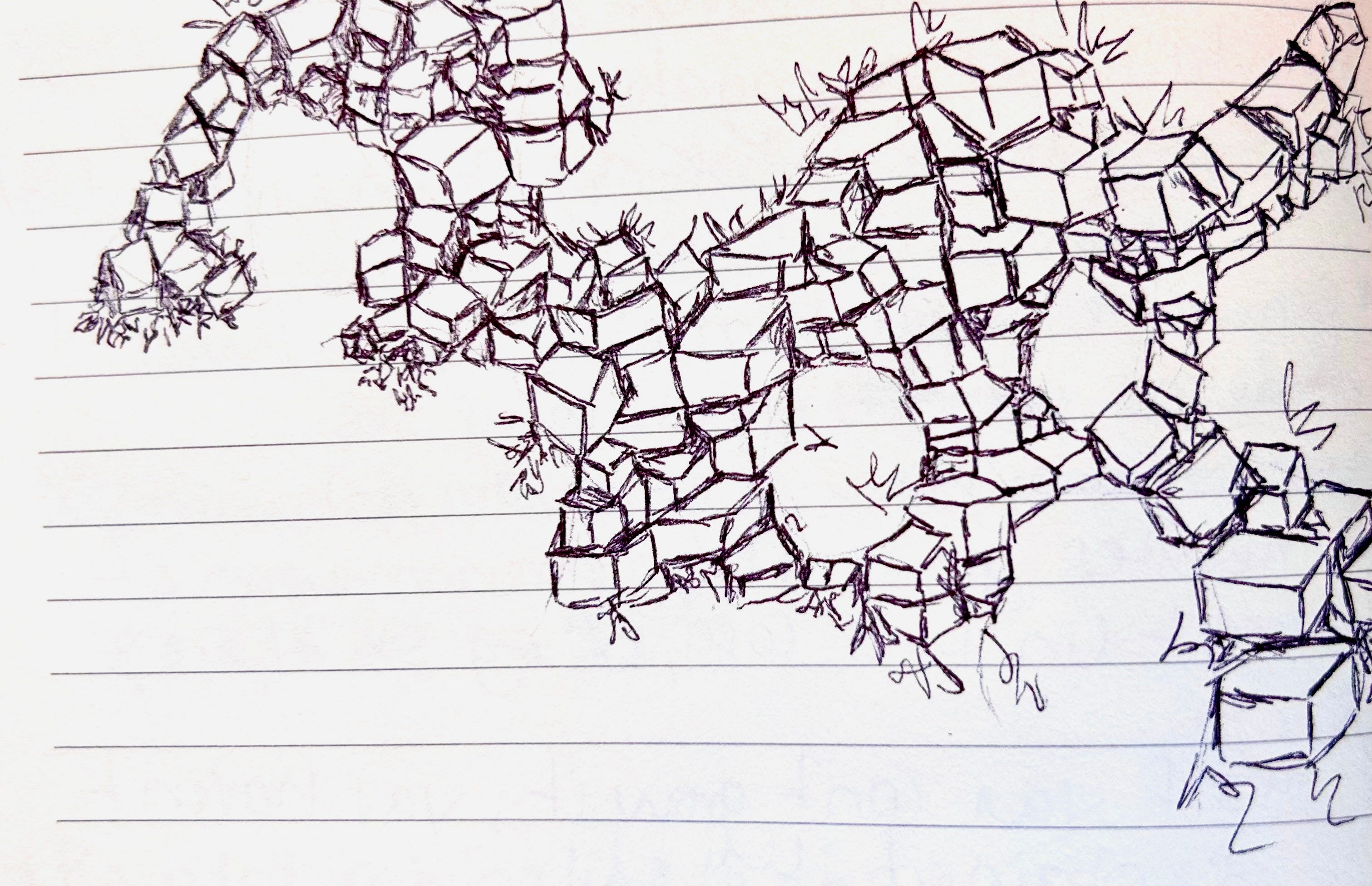
In a flat environment where nobody is handing you a defined problem, a clear deadline, or a job description that tells you where to start, raw material is formless. Ambiguous. Possibility without direction.
A team with high autonomy and no crystallizer can spin in that ambiguity indefinitely, generating energy without ever producing something others can react to. The crystallizer is the person who makes the first move. They are a master at transforming formlessness into structure.
So who is the crystallizer? Let’s start by looking at what their personality, cognition, and motivations might be, and see if the persona becomes more clear.
Personality underpinnings
Openness to experience: the ideas facet.
This trait is about staying curious in the presence of the unknown. It’s one dimension of the Big Five, the most widely accepted personality framework in modern personality psychology.
At its atomic level, openness can be broken down into six primary facets, but the one I think matters most for the crystallizer is the ideas facet, because it’s most associated with internal intellectual life. The pleasure of abstract thought, the draw toward complexity, the appetite for ideas that don’t yet have practical application. People high on this facet are genuinely interested by ambiguity. To them, it’s something to explore.
This matters for the crystallizer because making something before the problem is defined requires exactly this orientation. You can't compress formlessness into form if your instinct is to resolve or avoid ambiguity rather than inhabit it.
Action orientation.
This trait is about moving from intention to artifact without waiting for clarity. Research found that action-oriented people initiate action under uncertainty without needing more information, more clarity, or more consensus. State-oriented people on the other hand, ruminate, plan, and seek resolution before acting.
The crystallizer is strongly action-oriented, but with a specific target. They don’t just act fast; they act into the problem. They make something to think with. The urgency is toward form, not completion.
Creative identity and self-efficacy.
Recent research distinguishes two related but distinct constructs. Creative self-efficacy is the confidence in one's capacity to produce creative outcomes. Creative identity goes one step deeper: the degree to which being creative is central to one’s sense of self. Someone with high creative identity doesn’t just believe they can make things. They are a maker.
Together these two constructs explain something specific about the crystallizer: not just that they make things, but that they keep making things even in difficult conditions, and even when what they’re making is imperfect.
Their sense of self isn’t riding on any single artifact being good, which means the exposure of sharing something imperfect may not destabilize them the way it would someone whose identity is more tightly coupled to their outputs.
Cognitive & neurological underpinnings
Default-executive network coupling.
There’s a structural reason why the ideas facet of openness might produce the specific pattern we’re describing, and Scott Barry Kaufman’s research on openness and creative cognition points toward it. High openness, particularly on the ideas facet, appears to be associated with a specific kind of neural coupling. The default network (imagination, self-referential thought, future thinking) and the executive network (focused attention, cognitive control) typically operate in opposition. Highly open people activate both simultaneously.
If that coupling is what’s at work in the crystallizer, it might explain the specific quality of what they make: an artifact that is formed enough to hold, and open enough to invite. Something others can react to before the problem is fully understood. The crystallizer doesn’t switch from imagination to execution, they run both at once.
Motivational underpinnings
Intrinsic motivation and the autotelic personality.
What makes the crystallizer motivated to start without clarity, to make something imperfect in public, to keep going before anyone validates the direction?
Csikszentmihalyi’s autotelic personality offers one answer: some people pursue activities for their own inherent interest, not for external reward or validation. The autotelic person finds the process intrinsically satisfying. For the crystallizer, the act of compressing potential into form may itself be the reward. The outcome matters less than the act of making.
Theresa Amabile’s research on creativity in organizations adds a dimension for understanding this in a work context. Her intrinsic motivation principle of creativity suggests that intrinsic motivation may be the single most powerful predictor of creative output, and that extrinsic motivators (evaluation, surveillance) can tend to suppress it.
The incremental principle.
Carol Dweck’s incremental theory of ability, widely known as growth mindset, proposes that people differ in whether they believe their abilities are fixed or able to be intentionally developed. For those with a growth orientation, failure is information.
For the crystallizer, the imperfect artifact isn’t evidence of inadequate capacity, it’s a stage in a process. The draft doesn’t need to be finished to be valuable. What matters is that something moved.
How to spot the crystallizer
The crystallizer makes something before anyone has agreed on what we’re solving. A rough diagram mid-conversation. A first draft before the brief is final. They don’t announce that they’re making something. They just make it.
They hold the artifact lightly. The draft is not them, it’s something they made. So they share it knowing it’s wrong, present it knowing it’s incomplete, and skip the defensive preamble. The artifact is the argument. They trust it to improve through contact with other people. They’re trying to open the conversation.
The misread is a fast executor or a performative maker. Both can look like a crystallizer until you watch the outcome. The executor’s artifact closes a task as quickly as possible, without opening the conversation or encouraging iteration. The performative maker produces finished-looking work that’s designed to impress rather than to advance (it might be missing substance or miss the problem entirely).
Can you think of someone like this that you’ve met or worked with? Does the persona stick? What’s missing?
If this essay sparked something, pass it along to someone you want to think with.
Propagation
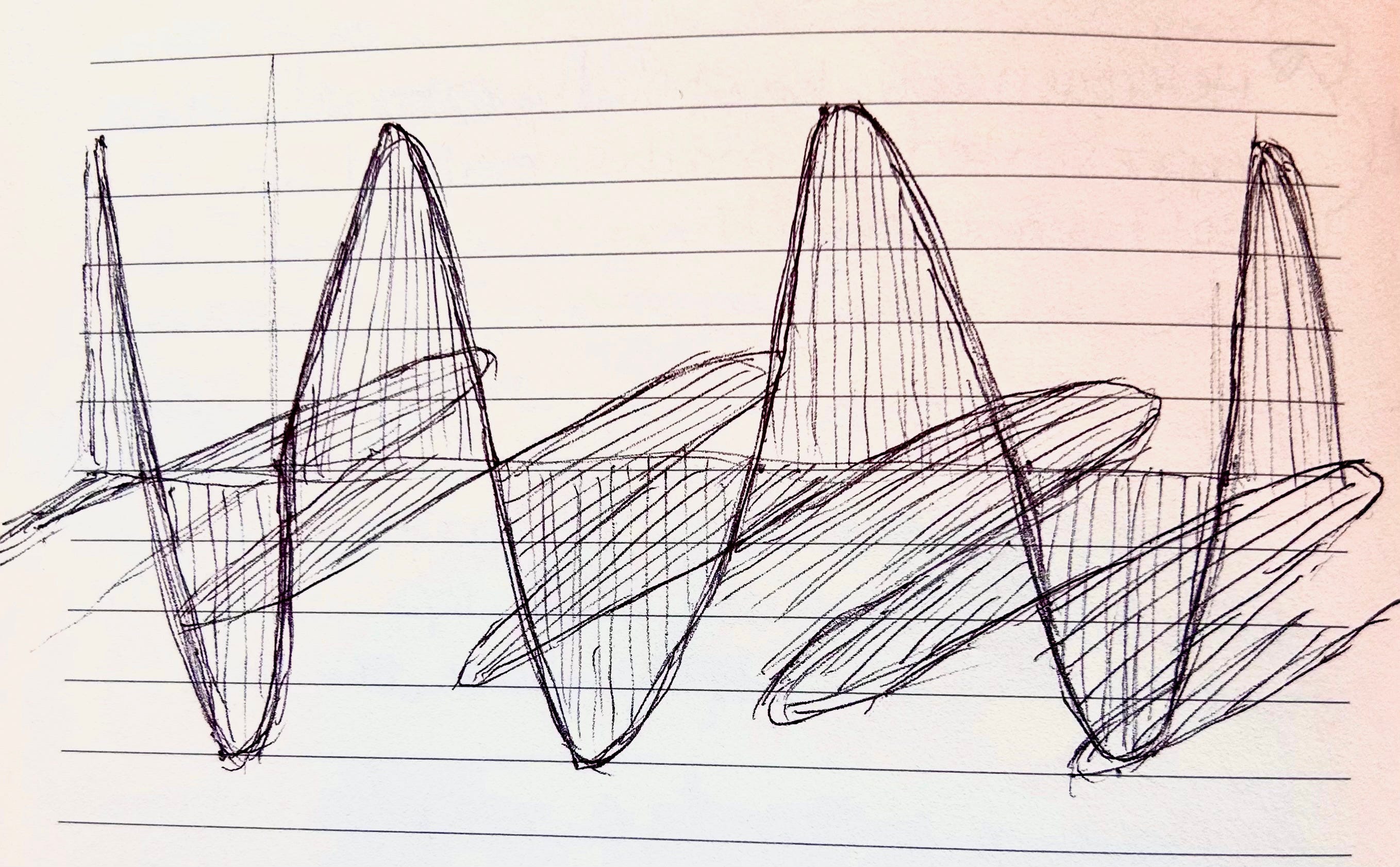
In a fast-paced environment, having the right answer isn’t enough. The team needs to be asking the right questions first. Without a propagator, a team can be highly capable (talented crystallizers, committed diffusers) and still work themselves into a dead end, because no one shifted the mental model when it was wrong (no sense in going up the mountain if it’s the wrong mountain to climb).
The propagator is the person who changes what the group is thinking about, without necessarily being the one who solves the problem. Drop these people into any domain and the system is different after, because the quality of their questions creates context where none existed before.
You know where I’m going next. What are propagators made of? Let’s try to build a clear picture.
Personality underpinnings
Intellectual humility.
While the crystallizer is high on the ideas facet of openness to experience, the propagator is likely high on the values facet, the dimension most associated with willingness to re-examine assumptions, challenge conventions, and revise beliefs. People high on this facet can tolerate the possibility of being wrong.
Intellectual humility is the interpersonal expression of that same orientation. It adds specificity to the values facet: the active recognition of the limits of one’s knowledge and the willingness to hold one’s mental models loosely, even under social pressure.
This matters for propagation specifically because you can’t ask a question that reframes how others see a problem if you’re ego-invested in the answer. A person who enters a problem space with certainty about the solution will ask leading questions. Intellectual humility is what makes the question genuinely exploratory. It's also what makes propagators great domain generalists. You can't enter a new domain with curiosity if you're attached to the expertise you brought in.
Cognitive and neurological underpinnings
Perspective-taking.
Cognitive perspective-taking is the ability to model how another person thinks by reconstructing their mental models, without necessarily absorbing their emotional state. People high in cognitive perspective-taking can also better anticipate others’ reasoning and adapt quickly as context changes.
For propagators, this is the prerequisite for the reframe. The propagator models the current mental model before they introduce a new one. Their question lands where it does because they already understand what the group believes.
This also explains how they can influence strangers. They don't need relationship history to model how you think. And they don’t need the authority that comes from a reporting line or “expert” title to get others on board. They just need to pay close attention.
Cognitive flexibility.
Cognitive flexibility describes the cognitive ability to switch between mental models by adapting to changing demands without being locked into a single frame of reference.
For the propagator, cognitive flexibility is what makes domain generalism possible at the cognitive level. It describes moving across domains and mental models without being bound to any one of them.
The propagator can enter a problem space they’ve never touched because they’re applying a domain-general reasoning capacity that works across contexts. This is also what distinguishes them from the specialist who gets stuck: the specialist’s reasoning is optimized for their domain. The propagator’s reasoning is optimized for switching.
Integrative complexity.
Integrative complexity measures the degree to which thinking involves recognizing and integrating multiple perspectives simultaneously. Low integrative complexity: one frame, clean conclusions. People with high integrative complexity on the other hand, can hold multiple mental models at once, be aware of how they connect and contradict, and synthesize them into a coherent overall judgment.
The propagator needs both cognitive flexibility to enter any domain without getting stuck in it, and integrative complexity to make connections between the current mental model and their own experience simultaneously. Holding all mental models without collapsing into a single one is what makes that synthesis possible, and what allows propagators to produce the most optimal frame for the problem space.
Motivational underpinnings
Interest curiosity.
Todd Kashdan’s work distinguishes between deprivation curiosity (the anxious drive to close an information gap), and interest curiosity (joyful exploration, curiosity as pleasure rather than relief). Research maps interest curiosity closely to the ideas facet of openness to experience. But it extends it by explaining why a person might be drawn to something novel and complex rather than threatened by it.
For the propagator, this is the motivational engine underneath the reframe and domain generalism. Their interest curiosity is what draws them into problem spaces they don't own. They're not there to extract value or demonstrate expertise. They're genuinely interested in what the problem is. A propagator’s question only works if they genuinely want to see where it goes. If the curiosity underneath is deprivation-based (if they need to know the answer), they’ll produce rigidity, not exploration.
How to spot the propagator
In the middle of a debate that’s been going in circles, they ask the question and go quiet. They’re watching what it does, not performing for the room. If the question lands, they let the group run with it. If it doesn’t, they try a different angle.
Notice that they can do this as a stranger. They walk into a team they’ve never met and move the thinking. Not because they charmed anyone or leveraged relationships. Because they paid close attention, modeled how the group was reasoning, and found the question that hadn’t been asked.
The misread is the skilled facilitator who also engages groups, or the Socratic questioner who already knows the answer they want to hear. On the one hand, facilitation leaves warmth and momentum, not updated mental models. Facilitation is process. Propagation is epistemic. On the other hand, Socratic questioning moonlights as exploration, but the questioner becomes uncomfortable when the group arrives somewhere they didn’t intend. Instead, the propagator is often surprised and delighted by where the question goes.
Can you think of someone like this that you’ve met or worked with? Does the persona stick? What’s missing?
Diffusion
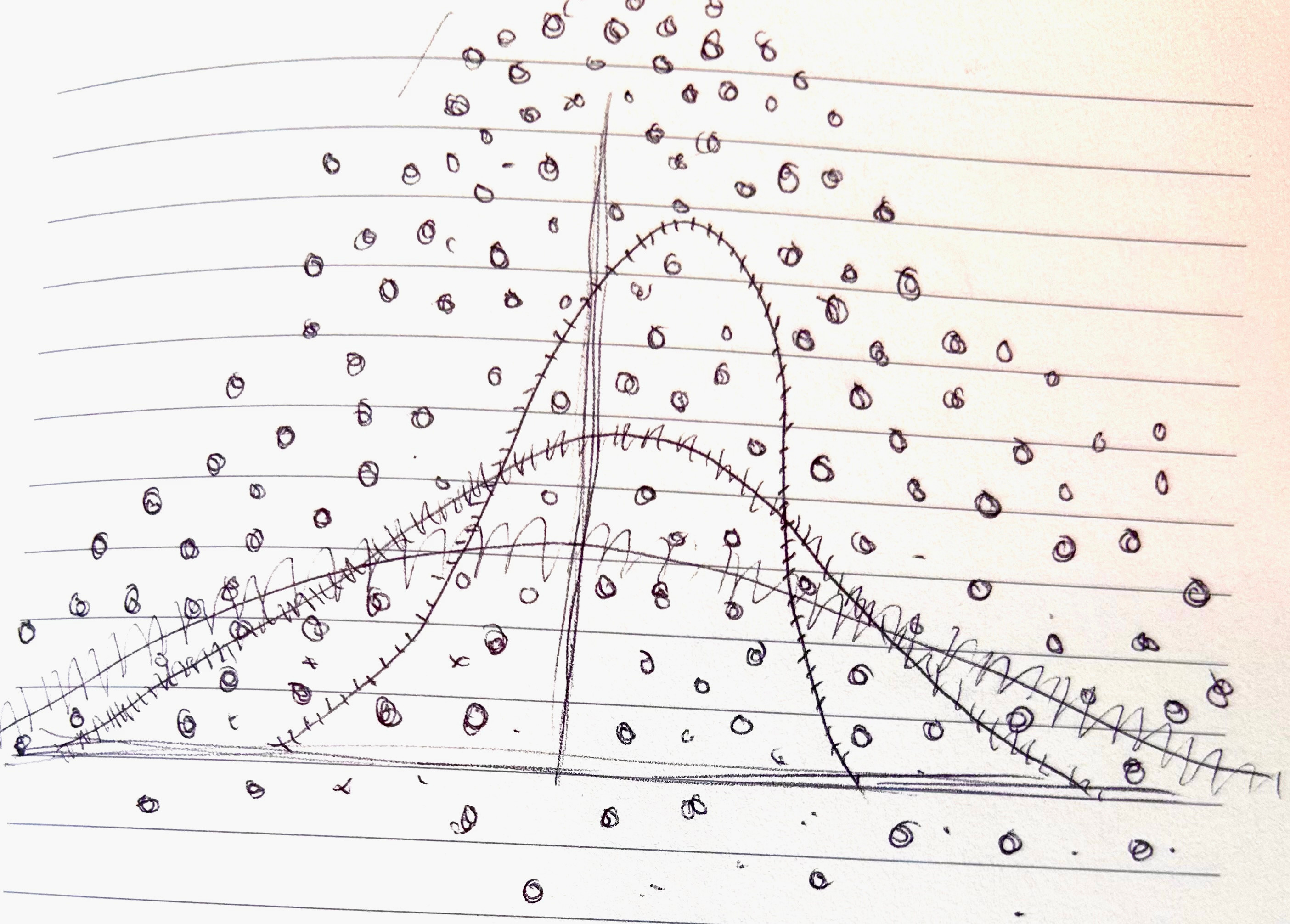
In a flat environment, structure doesn’t come from the org chart anymore. Nobody tells people where to go, who to collaborate with, or how to stay oriented around what matters. Without a diffuser, that informal coherence simply doesn’t exist. This can lead to chaos or worst, disengagement.
The diffuser is the person who holds the informal structure together without being assigned to do it. They become their own gravitational center. They add friction. But it's the kind of friction that elevates rather than destabilizes.
If you’ve read this far, I hope you have your popcorn ready. We’re on our last persona. And I know I’m curious to find out what they’re made of. Let’s build some clarity.
Personality underpinnings
Emotional stability.
Emotional stability is the inverse of neuroticism, the fifth dimension of the Big Five. Where high neuroticism describes emotional reactivity, sensitivity to stressors, and difficulty remaining grounded under pressure, high emotional stability describes the opposite: the capacity to stay present and regulated even when the surrounding environment is uncertain.
For the diffuser, this is the foundation. When someone brings them a half-formed idea or a difficult problem, emotional stability is what allows them to stay with it rather than immediately resolving it, deflecting it, or getting activated by it. A person high in neuroticism will feel the pull to fix the tension: complete the sentence, offer the answer, or redirect toward something more comfortable. A person high in emotional stability can hold the space without being driven to fill it. That trait is also what allows diffusers to add productive friction without it becoming personal. They can challenge and redirect from a stable base, not from anxiety.
Assertiveness.
Assertiveness is a facet of the extraversion trait in the Big Five. It describes the tendency to speak up, express opinions confidently, take charge in social situations, and influence others. People high in assertiveness don’t wait to be asked. They step into the gap.
For the diffuser, assertiveness is what produces the organizing force. They can tell a group it’s going in the wrong direction. They can name what’s not working. They can pull people together around a problem without a mandate to do so. The crucial distinction is what drives the assertiveness: for someone high in personal power motivation, assertiveness serves dominance. For the diffuser, assertiveness is in service of the group’s outcome. They direct because they care about what gets produced.
Cognitive and neurological underpinnings
Social cognition.
This construct describes the capacity to pick up subtle social signals before they become explicit, like sensing when a group is misaligned, when someone has been sidelined, when the energy in the room doesn’t match the stated agenda.
The diffuser registers these signals continuously. This is what allows them to redirect before the drift becomes visible to others, to know whose voice hasn’t been heard before anyone says so, to sense what the group needs before it can articulate it.
Social decision-making.
This is the capacity to know what to do with cues gathered from social signals. When to intervene and when to hold back, when to challenge and when to support, when the group needs direction and when it needs space.
This is the cognitive judgment that makes the diffuser’s timing precise. It’s the ability to adapt action to context in real time. Together these explain something specific about the diffuser: they don’t just read situations well, they act on what they read at the right moment. The perception tells them what’s happening. The decision-making tells them what to do about it.
Motivational underpinnings
Prosocial motivation.
Adam Grant defines prosocial motivation as the drive to put effort for the benefit of others, which is distinct from self-serving motivations and from pure intrinsic motivation. Research confirms it predicts knowledge sharing, elevating others’ thinking, and contributing without credit.
This is what separates the diffuser’s assertiveness from dominance. Someone who challenges a group’s direction for personal power wants to be the one to advance. The diffuser wants the group to find the better direction.
This also explains why the diffuser doesn’t people-please. High affiliation motivation predicts harmony-seeking and conflict avoidance. The diffuser’s motivation isn’t affiliation in that sense. It’s prosocial: oriented toward the outcome, not toward being liked. They’ll add friction because the friction serves what the group is trying to build.
Emergent leadership.
Research on emergent leadership describes the phenomenon where individuals rise to influence and coordinate groups without being formally assigned to them. Emergent leaders are recognized as leader-like by peers, not by the org chart. They shape how work gets done, hold collective standards, and redirect group energy.
The diffuser is an emergent leader. What makes them distinctive is the specific combination: high enough assertiveness to take informal charge, high enough prosocial motivation that the charge never tips into dominance, high enough emotional stability to hold the group’s uncertainty without being activated by it, and high enough social perception and decision-making to act on situations at the right moment.
How to spot the diffuser
They’re often not the most senior person. They may not have a team. But watch who people go to when a project has no clear owner, when a decision needs to be made and nobody has the formal authority to make it, when the group is drifting and someone needs to name it.
They’re the one who assembles the right people before any meeting is scheduled. Who tells someone directly that the approach isn’t working. Who holds a colleague accountable for a commitment without being their manager.
People seek them out before presenting something publicly. Not just to feel heard, but to get a real read. They will push back. They will redirect. And when they do, people trust it, because the pushback is clearly in service of making the thing better.
The misread is the popular person, the highly networked person, or the manager. Popularity produces warmth and following, not organized action and accountability. Networking is transactional, diffusing is generative and structural. Managing is a craft that someone is explicitly assigned to. Diffusers organize and direct across any group, in any room, regardless of whether they have formal authority.
Can you think of someone like this that you’ve met or worked with? Does the persona stick? What’s missing?
This is just the beginning
I started this series with a feeling I couldn’t quite name. That something structural had changed, and that the people who would help organizations navigate it were maybe hard to see with our current ‘set of eyes’.
This essay was my attempt to make them more visible. The picture is getting clearer, but it’s far from complete.
The next essay will be about the other side of the puzzle: if these are the people the transition needs, what does the organization look like? Not just culturally, but structurally. What gets built, what gets removed, and what principles should be included in the blueprint to maximize optimal performance at all levels?
And then I want to come back and push harder on the patterns I built out today. Does one person needs all three patterns to be excellent? What combinations work best, if any? What does it costs to operate outside your natural pattern? That’s for later.
If any of this is landing for you (or not), I’d love to hear it. The thought-seed grows better with more minds on it.