
Judgment.
As strange as it is to admit, this trait has never been on my list of things to research. If I wanted to predict decision-making, I’d dig into a trait like conscientiousness. Or maybe cognitive flexibility. Fluid intelligence too. But judgment on it’s own. Never.
On it’s own, judgment feels too… elusive. Like it works deep in the background of consciousness, happy in the shadows. Content with being bundled as a footnote under the grander theories of human behavior.
But judgment has resonated increasingly louder in the collective mind, as we grapple with big questions like what is human? What is machine?
And above all other traits, judgment has come out on top as the abstraction that best explains what humans uniquely and unequivocally contribute to the knowledge economy. When machines render through patterns and options in minutes from what would have taken a human years of experience to achieve, what’s left is making the right choice. Because we’re realizing that more output is also more noise, and we need the human to tell us what’s actually worth acting on.
Nice to meet you, judgment
So of course, I’ve been intrigued by judgment’s rising popularity. I’ve tried to acquaint myself by glancing at an opinion piece here, while turning the pages to a research paper there.

And after a few months of this, judgment still feels elusive to me. But slightly less so than before. I’ve come to the conclusion that although judgment is best brewed in the innermost corners of the mind, it comes to the surface sometimes, in the form of a question.
Yes. A question.
And it is through the question that I will attempt to observe judgment in this essay, and see if this mental model holds. Because observation is key. Without it, we’re just making assumptions about who someone is based on our biased perception of them. And that’s unfair, if not dangerous.
Building a definition
I’ll start by anchoring on the dictionary definition (I find that useful sometimes), and then cross-compare it against what the research says.
Judgment
The act or process of forming an opinion or evaluation by discerning and comparing
An opinion or decision that is based on careful thought
A formal utterance of an authoritative opinion
An opinion so pronounced
A few pieces strike me as important. Careful thought and discernment, followed by commitment. A formal stance as opposed to a loose opinion.
And the research agrees. Judgment is the capacity to discern and commit to the right course of action in a particular situation, when the rules, patterns, or precedents run out, conflict, or don’t cleanly apply. Which is true of most contexts involving real uncertainty.
Every time you decide which detail is worth your attention, you make a small bet about its downstream effects. As you discern, you check it against all available information to make the best prediction and choice. This also involves being comfortable abandoning old views in light of new information so you can clearly isolate the solution path versus muddying the waters with old opinions that no longer serve good judgment.
Then commit. Judgment only starts once you close the gap between seeing clearly and taking action to get to the vision. Otherwise it’s just analysis.
If judgment walked into the room, would you recognize it?
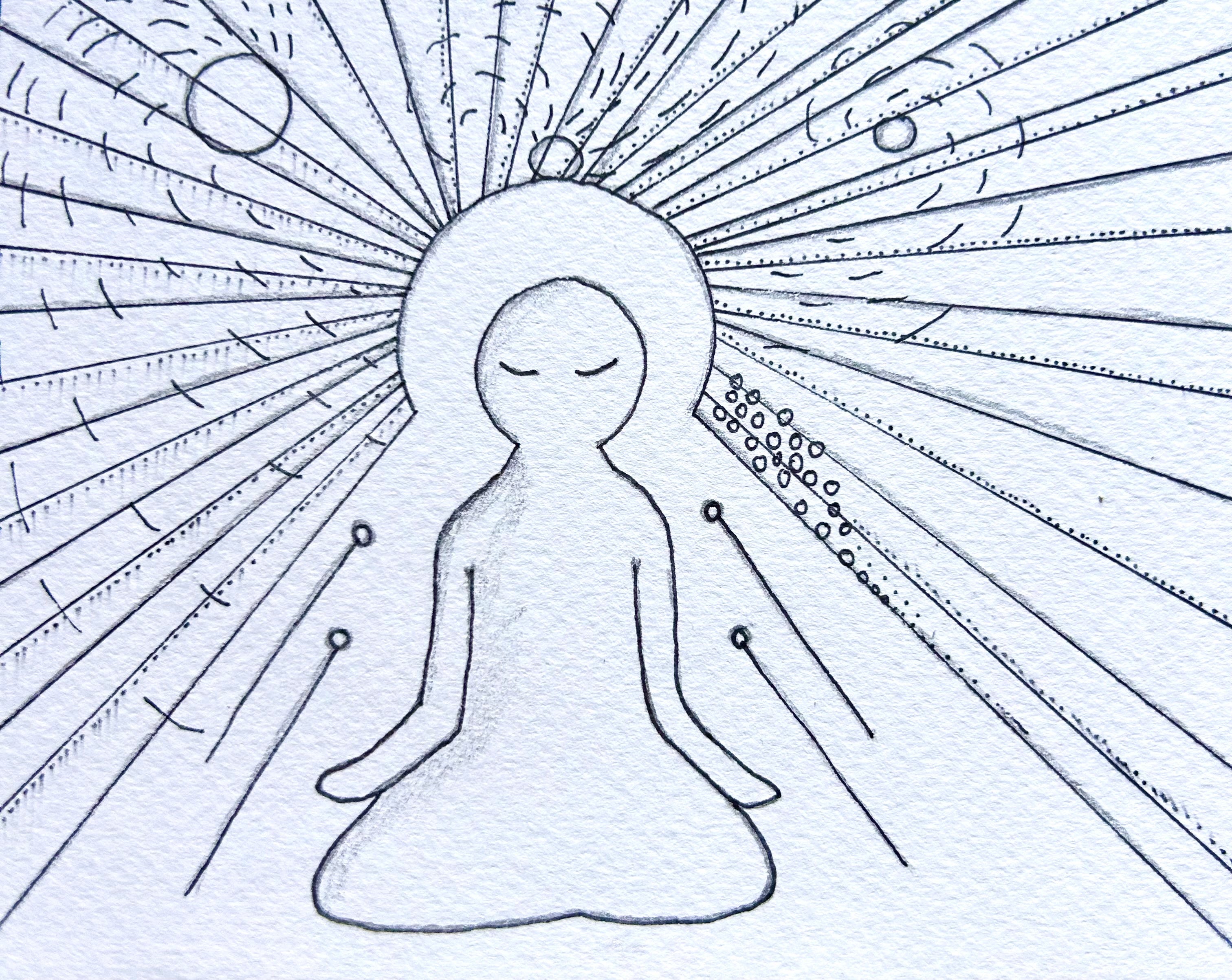
What’s hard about observing judgment is that it seems almost easier to look at the outcome of it. Was it the right choice? Did it work?
But something is lacking in that approach, because a lot more than just good judgment can go into making an outcome good. So how do you observe judgment in action, as it’s happening?
A question is the observable artifact that might be helpful in this sense. It lets you watch someone build their judgment live, in real time. It’s not evidence of the entire judgment of course, but knowing what to look for in a question can help reveal how the person is processing information, and what opinions and actions they are willing to commit to.
The recipe for a high-judgment question
I’m going to use one situation throughout all of my examples, so the difference between a low and high judgment question can be clear. I’m still testing out this mental model, so let’s see if it sticks, and if it’s worth building into something more concrete later.
The situation: A feature you shipped twelve months ago is showing a slow, steady decline in usage. It’s also expensive to maintain, because a non-arbitrary amount of engineering hours go into maintaining it. The decline is platform-wide, but a small number of your highest-paying accounts still use the feature constantly, and would be furious if it were touched. Leadership wants a recommendation by end of week on how to proceed.
What does the question assume?
A lot of questions hint at what someone already believes is true. A low-judgment question embeds that assumption as fact. “Why are people using the feature less?” assumes that the decline is a problem, and that usage is the right measure in the first place.
A high-judgment question exposes the assumption instead. A question like “Are we sure that fewer people touching the feature per month means fewer people are benefiting from it?” doesn’t accept the premise at face value, and opens up the discussion to other possibilities.
What does the question break down?
Questions can also serve to break down information into parts to see how they connect. A low-judgment question stays surface-level and states obvious facts. “How many people used the feature last month versus this month?” will reveal the trend of the decline, but won’t shed any light on its cause or its actual costs.
A high judgment question teases the problem apart to find the piece of information worth acting on. “Is the drop in usage spread evenly, or is it concentrated in one segment? If its concentrated, what to these people have in common?” changes what kind of decisions is even needed. It’s that discernment to action loop that I talked about earlier. The question starts pruning out information to see which lever is worth pulling on.
What does the question reframe?
Some questions live inside the accepted mental model, and that’s perfectly fine if the context calls for it. But sometimes, judgment means stepping outside of what is widely accepted in order to get to the root of the real problem (not the assumed problem). A low-judgment question stays inside the given frame without ever testing it. “What’s our timeline to fix the decline?” assumes fixing the number is the goal.
A high-judgment question steps back and asks whether the frame itself is the thing worth questioning. It also stakes an opinion inside the new frame it’s proposing. “What if this isn’t decline, but a sign of people graduating? New customers use the feature more heavily, then move on to more advanced options. What if we rebranded this as an onboarding feature instead of killing it?” reframes the problem and commits to a specific, verifiable reason as to why. It names the actual tradeoff and presents a hypothesis that moves the group closer to a decision that’ll inform the right action to take.
Creating clarity
There might be other and better ways to observe judgment that I just haven’t come across yet. And there are certainly many established ways to study the cognitive processes underlying judgment. But that’s not what I’m trying to do here.
I’m trying to understand the parts of judgment that I can see in other people, to create clarity. I agree that judgment is important. I tried to argue against it in my own little scribbled journal pages. But I agree with the abstraction, to some extent. I think there’s more to it though than just judgment. I never want to be so simplistic as to miss something important. But for now, as we contrast the parts of human thinking that are irreplaceable, judgment is certainly a very worthy trait to keep building clarity around. Let’s see where it takes us.